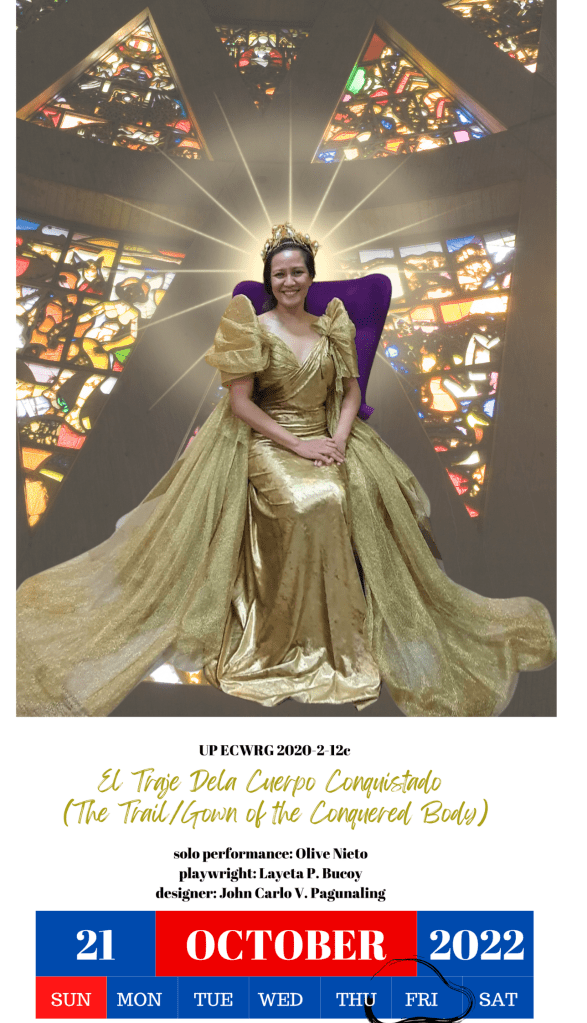
El Traje Dela Cuerpo Conquistada (The Trail/Gown of the Conquered Body)
Trilogy:
El Cuerpo (Noli Me Tangere’s Kabanata 26: Bisperas ng Piyesta) Fantasma (Noli Me Tangere’s Epilogo) Secreta Vida (MonoVlog)
The performance is funded by the University of the Philippines’ Enhanced Creative Work and Research Grant.
El Traje is a work in progress. We have 3 scholars reviewing the work this October to give comments and recommendations to our team. We are still looking for additional funds to translate and place captions in English, and to adapt the digital performance to an on-site performance (as originally envisioned in 2020).
*Special thanks to Ige Ramos and Michael Bernal for your brains and generosity.
Synopses
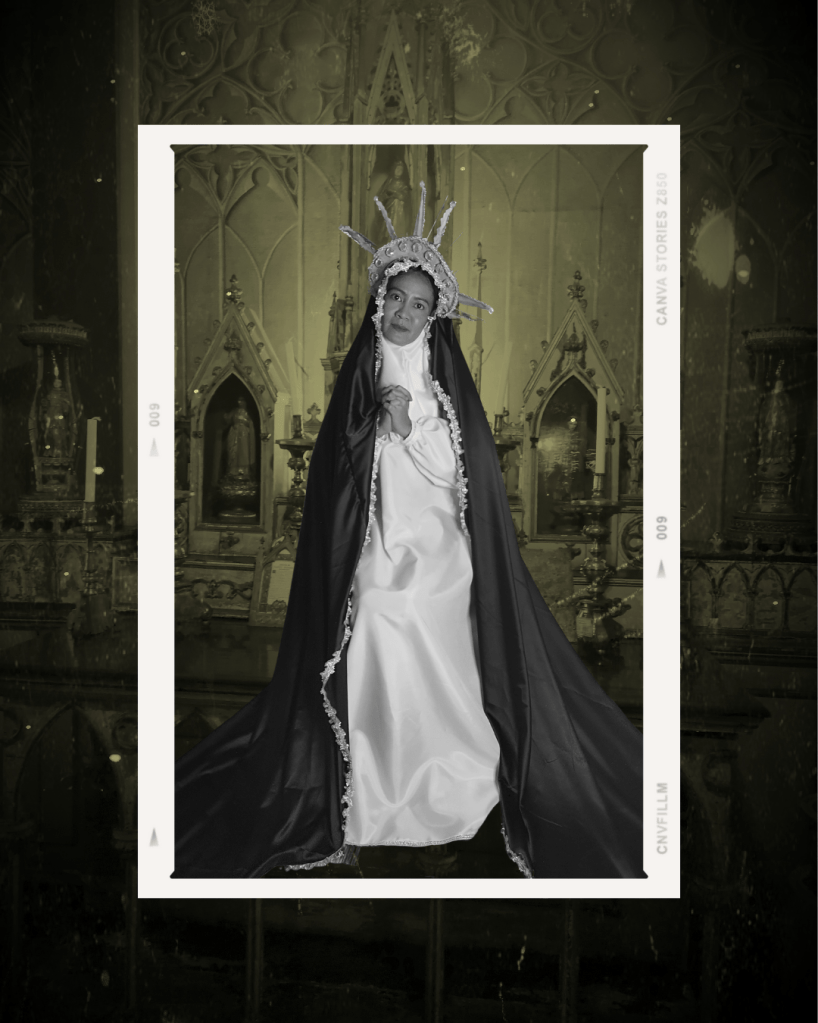
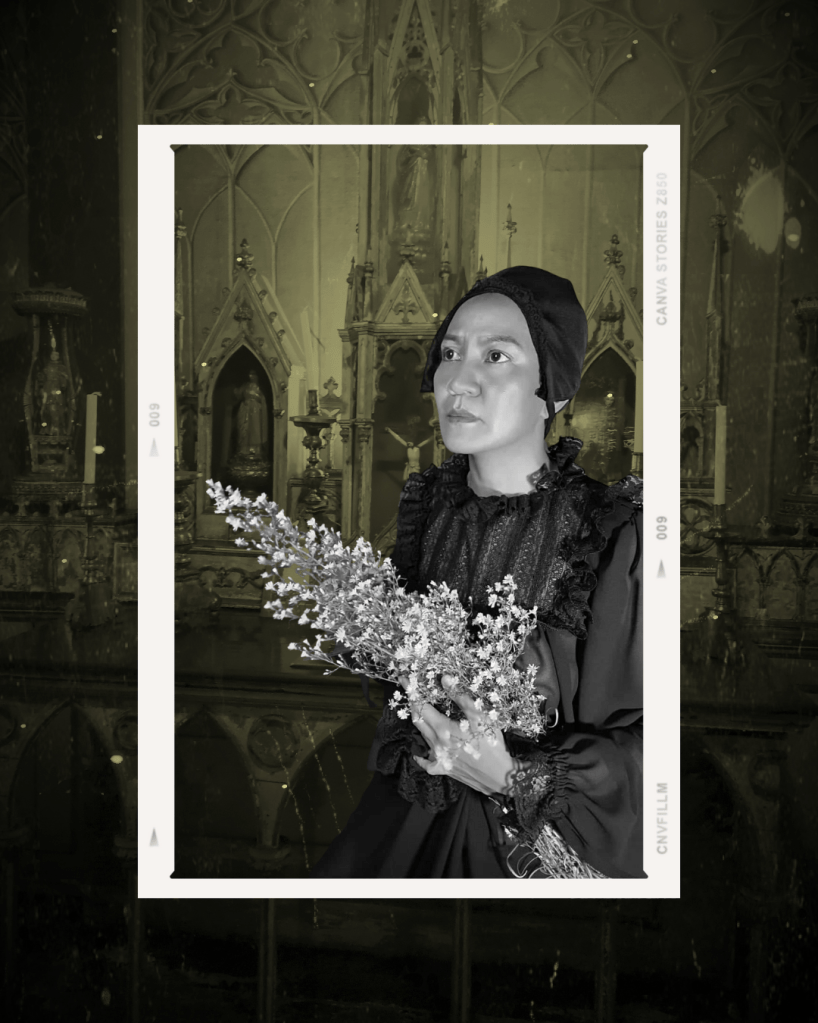
El Cuerpo is a solo digital performance centered on Panchang, a veil maker and performer in religious plays whose life is bound to the annual fiesta honoring the town’s patron saint. Sponsored by the gobernadorcillo, Panchang’s ritual performance has long been believed to sustain communal faith and invoke miracles. As a new theatre troupe—Komedya ng Tundo, trained by foreigners and favored for its novelty—rises in popularity, Panchang confronts the possible erasure of her labor, her body, and her tradition.
Staged during the pandemic, the performance parallels Panchang’s displacement with the performer’s own experience of shifting from stage-based theatre to online performance. Scenes unfold through fragmented digital tableaux, dramatic and staged readings, and close-up gestures framed by the camera. Incomplete costumes, found household objects, and improvised spaces function not as substitutions but as dramaturgical agents, exposing the labor and precarity behind performance-making.
As Panchang insists on repetition—performing not for innovation but for continuity—El Cuerpo interrogates what theatre is allowed to become in moments of rupture. The piece positions the performer’s body as a crossroads of ritual, failure, and adaptation, revealing how tradition and experimentation coexist within a changing performance ecology.
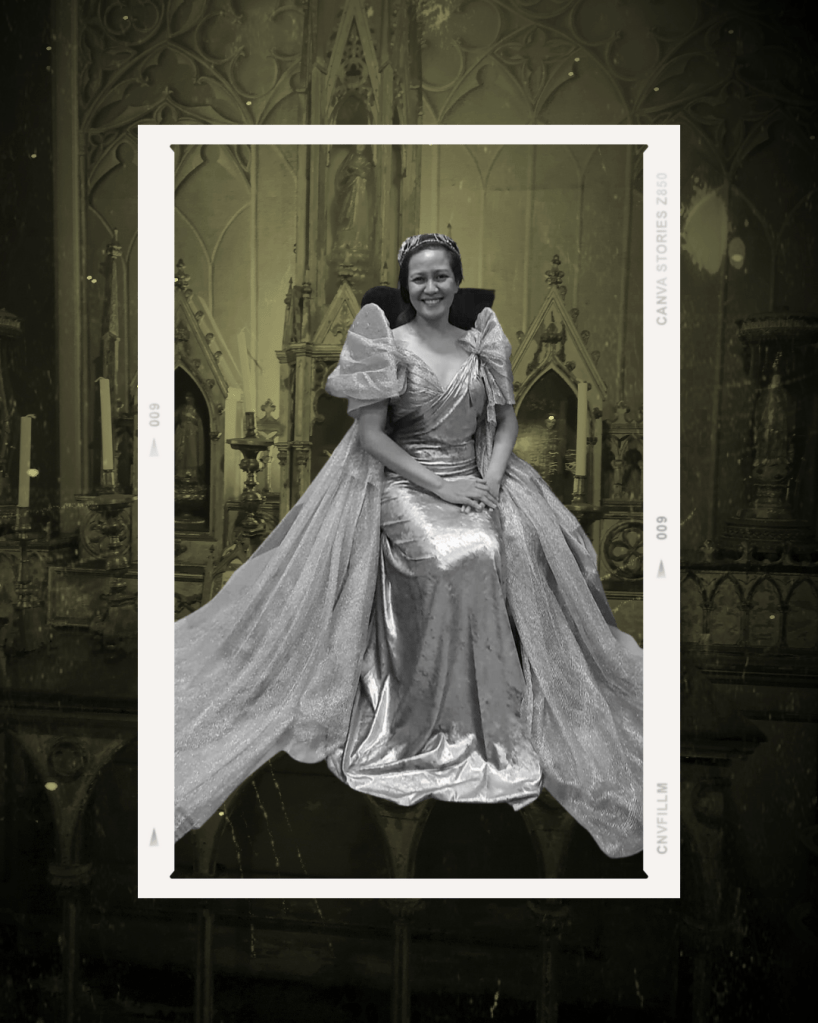
Fantasma is a solo digital performance adapted from the epilogue of José Rizal’s Noli Me Tangere, reimagined through the isolation of the pandemic and the politics of women’s visibility. On a stormy night, Maria Clara appears on the roof of the convent, crying out against the violence of hypocrisy that has enclosed her life. Long venerated as the ideal Filipina—pure, silent, and saintly—Maria Clara is stripped of her pedestal and reinhabited as a fractured, speaking body.
Performed through digital frames and fragmented lighting, Fantasma uses a handheld flashlight as a moving spotlight to reveal and conceal parts of the body, questioning who decides what of a woman’s body is shown, hidden, or sanctified. The performer’s brown body disrupts the colonial image of Maria Clara, exposing the labor and repression beneath her polished archetype.
The performance mirrors the solitude of pandemic-era digital theatre and foregrounds solo performance as both necessity and resistance. Fantasma asks whose stories are legible in digital space and reframes haunting as an act of reclamation—where the ghost refuses silence and insists on presence.
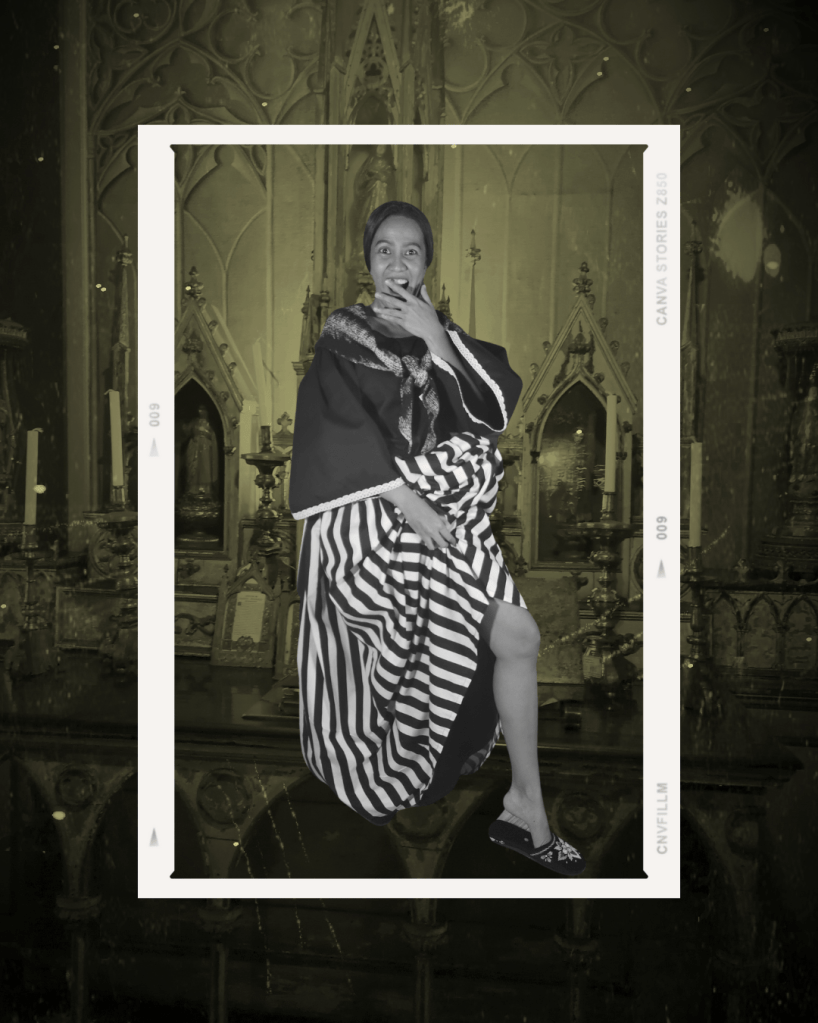
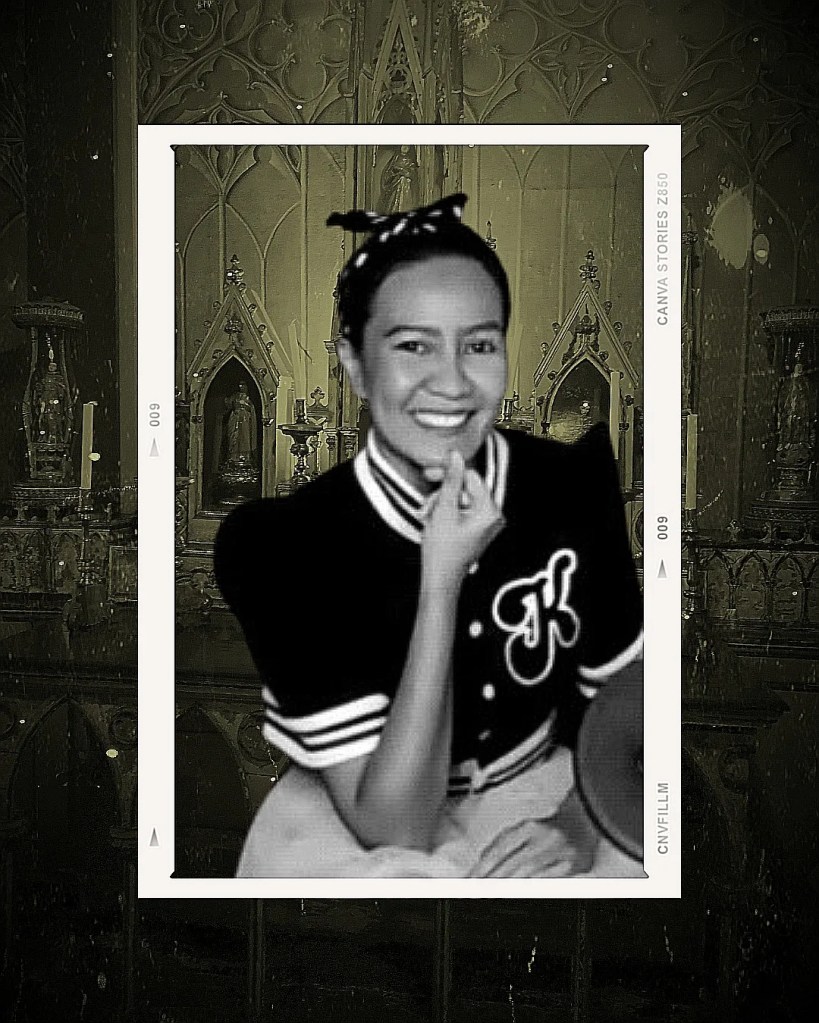
Secreta Vida is a solo digital performance staged as a MonoVlog—a hybrid of performance-lecture and rant vlog—that exposes the hidden labor, pressures, and contradictions of creating theatre during the pandemic. Addressing the audience directly as co-thinkers, the performer reflects on the artistic research behind El Cuerpo and Fantasma, unfolding her process in a scripted–improvised monologue shaped by the aesthetics of online confession and critique.
Blending personal narrative with academic reflection, the performance reveals the demands of multi-hyphenated creation: performer, dramaturg, director, designer, and digital technician. The camera becomes both witness and judge as the performer navigates institutional expectations, platform precarity, and the emotional toll of continuous adaptation. As digital performances vanish under shifting social media policies, Secreta Vida questions authorship, legitimacy, and ephemerality in online theatre.
The work culminates in a self-reflexive acceptance of uncertainty, affirming performance as an evolving practice shaped by failure, iteration, and care for unseen audiences.









 Olive Nieto