


Flew all the way to Legazpi, Albay early this morning to watch the on-site performance of Sining Banwa.
Ibang klaseng kaladkarin levels na ako dahil sa inyo, Sari Saysay! Salamat at break a leg!
Flew all the way to Legazpi, Albay early this morning to watch the on-site performance of Sining Banwa.
Ibang klaseng kaladkarin levels na ako dahil sa inyo, Sari Saysay! Salamat at break a leg!
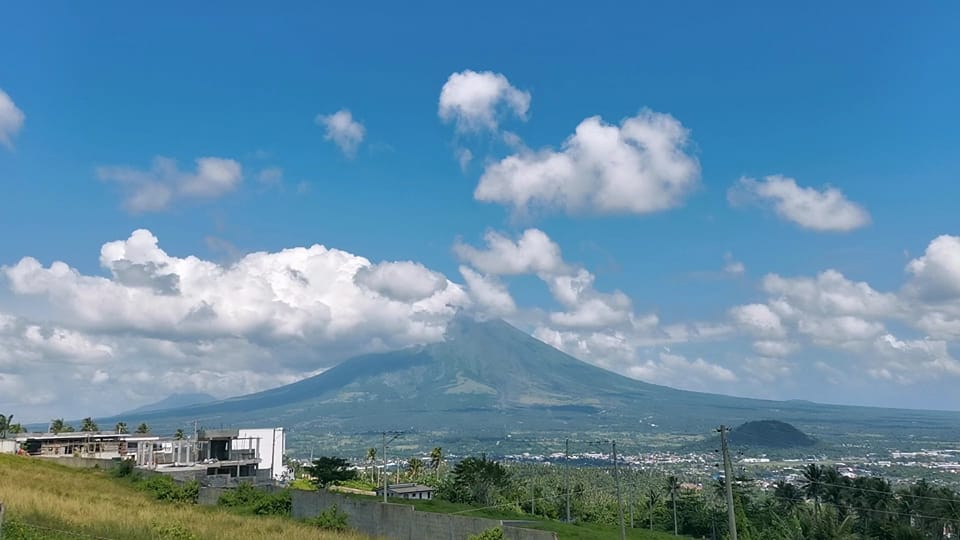
Marhay na aga, majestic Mayon Volcano! We are at alert level 2!!!
I’m here to work with the Sining Banwa community theatre.
Naku napanuod ko na ito. Yung inimbita ka for work tapos ikaw pala ang alay sa bulkan. 
So honored to be invited in the new #FeelingsExplained podcast episode! 

Saya that I get to chika about the higher highs, lower lows, and the rollercoaster of emotions with my fave people from MC, Gian Viatka and Pat Berin! I appreciate you for planting love and hope in your podcast!
Part 1 is up: https://spoti.fi/3ypqodO
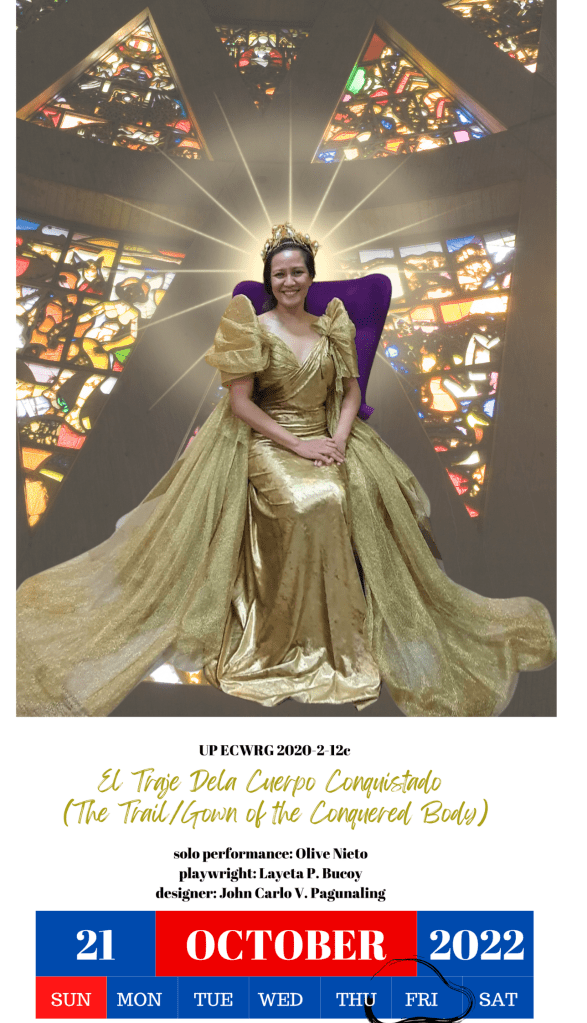
El Traje Dela Cuerpo Conquistada (The Trail/Gown of the Conquered Body)
Trilogy:
El Cuerpo (Noli Me Tangere’s Kabanata 26: Bisperas ng Piyesta)
Fantasma (Noli Me Tangere’s Epilogo)
Secreta Vida (MonoVlog)
The performance is funded by the University of the Philippines’ Enhanced Creative Work and Research Grant.
El Traje is a work in progress. We have 3 scholars reviewing the work this October to give comments and recommendations to our team. We are still looking for additional funds to translate and place captions in English, and to adapt the digital performance to an on-site performance (as originally envisioned in 2020).
*Special thanks to Ige Ramos and Michael Bernal for your brains and generosity.
Synopses
El Cuerpo is a solo digital performance centered on Panchang, a veil maker and performer in religious plays whose life is bound to the annual fiesta honoring the town’s patron saint. Sponsored by the gobernadorcillo, Panchang’s ritual performance has long been believed to sustain communal faith and invoke miracles. As a new theatre troupe—Komedya ng Tundo, trained by foreigners and favored for its novelty—rises in popularity, Panchang confronts the possible erasure of her labor, her body, and her tradition.

Staged during the pandemic, the performance parallels Panchang’s displacement with the performer’s own experience of shifting from stage-based theatre to online performance. Scenes unfold through fragmented digital tableaux, dramatic and staged readings, and close-up gestures framed by the camera. Incomplete costumes, found household objects, and improvised spaces function not as substitutions but as dramaturgical agents, exposing the labor and precarity behind performance-making.
As Panchang insists on repetition—performing not for innovation but for continuity—El Cuerpo interrogates what theatre is allowed to become in moments of rupture. The piece positions the performer’s body as a crossroads of ritual, failure, and adaptation, revealing how tradition and experimentation coexist within a changing performance ecology.
Fantasma is a solo digital performance adapted from the epilogue of José Rizal’s Noli Me Tangere, reimagined through the isolation of the pandemic and the politics of women’s visibility. On a stormy night, Maria Clara appears on the roof of the convent, crying out against the violence of hypocrisy that has enclosed her life. Long venerated as the ideal Filipina—pure, silent, and saintly—Maria Clara is stripped of her pedestal and reinhabited as a fractured, speaking body.

Performed through digital frames and fragmented lighting, Fantasma uses a handheld flashlight as a moving spotlight to reveal and conceal parts of the body, questioning who decides what of a woman’s body is shown, hidden, or sanctified. The performer’s brown body disrupts the colonial image of Maria Clara, exposing the labor and repression beneath her polished archetype.
The performance mirrors the solitude of pandemic-era digital theatre and foregrounds solo performance as both necessity and resistance. Fantasma asks whose stories are legible in digital space and reframes haunting as an act of reclamation—where the ghost refuses silence and insists on presence.
Secreta Vida is a solo digital performance staged as a MonoVlog—a hybrid of performance-lecture and rant vlog—that exposes the hidden labor, pressures, and contradictions of creating theatre during the pandemic. Addressing the audience directly as co-thinkers, the performer reflects on the artistic research behind El Cuerpo and Fantasma, unfolding her process in a scripted–improvised monologue shaped by the aesthetics of online confession and critique.
Blending personal narrative with academic reflection, the performance reveals the demands of multi-hyphenated creation: performer, dramaturg, director, designer, and digital technician. The camera becomes both witness and judge as the performer navigates institutional expectations, platform precarity, and the emotional toll of continuous adaptation. As digital performances vanish under shifting social media policies, Secreta Vida questions authorship, legitimacy, and ephemerality in online theatre.
The work culminates in a self-reflexive acceptance of uncertainty, affirming performance as an evolving practice shaped by failure, iteration, and care for unseen audiences.
3-in-1 Body Problem: El Traje dela Cuerpo Conquistada a.k.a. Olive as the Embodied Junction of Belongingness and Shifting Practices goes to the 2025 Performance Studies International PSi#30 XXX – CRUZO, CRUISING, CROSSROADS, Fortaleza, Brazil!

Noli Me Tangere > History is like chismis.
Sapi > theatre muse
Digital > inabutan kami ng ECQ, MECQ, monkeypox, atbp delubyo sa Pinas
Maria Clara = Me (?)
Me = (X + Y) + Z
Where
X = Digital Performance
Y = Sapi ng Muse
Z = Rizal is still very relevant
Last leg of our 18-month (or more) project. Thank you, UP ECWRG for the pera to support our slow performance making.
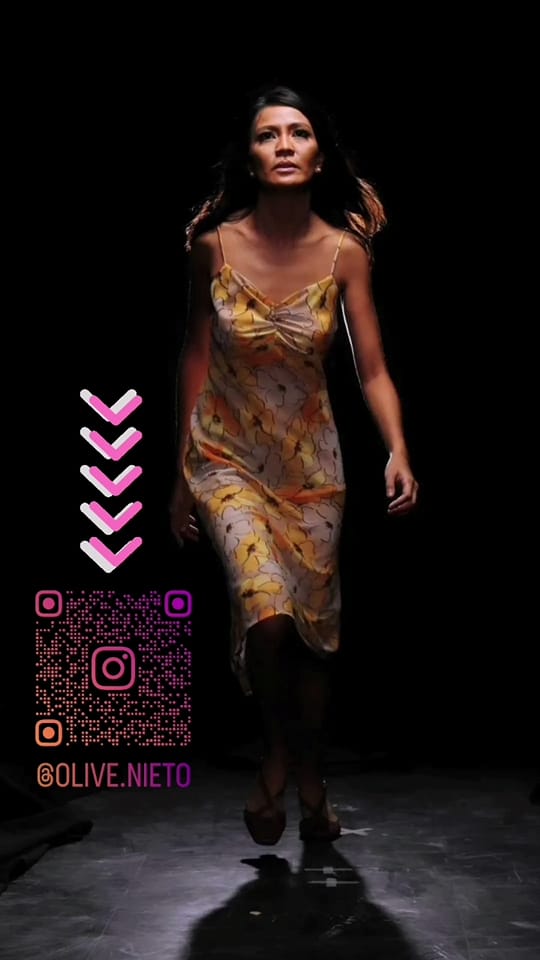
Slowly constructing the digital archive of my body of work via Instagram. Look for OLIVE.NIETO on Instagram or scan the QR code below (naks! techie tayo, mga ante!). Each photo contains a side kwento (story) about my experience in the production.
Some posts contain related papers where I also write about the performance for a conference or a book (naks! artist-scholar yarn?).
Bukas po lagi ang tindahan (since 2007) for creative works, resource person/moderator jobs and commercials! Let’s collab!
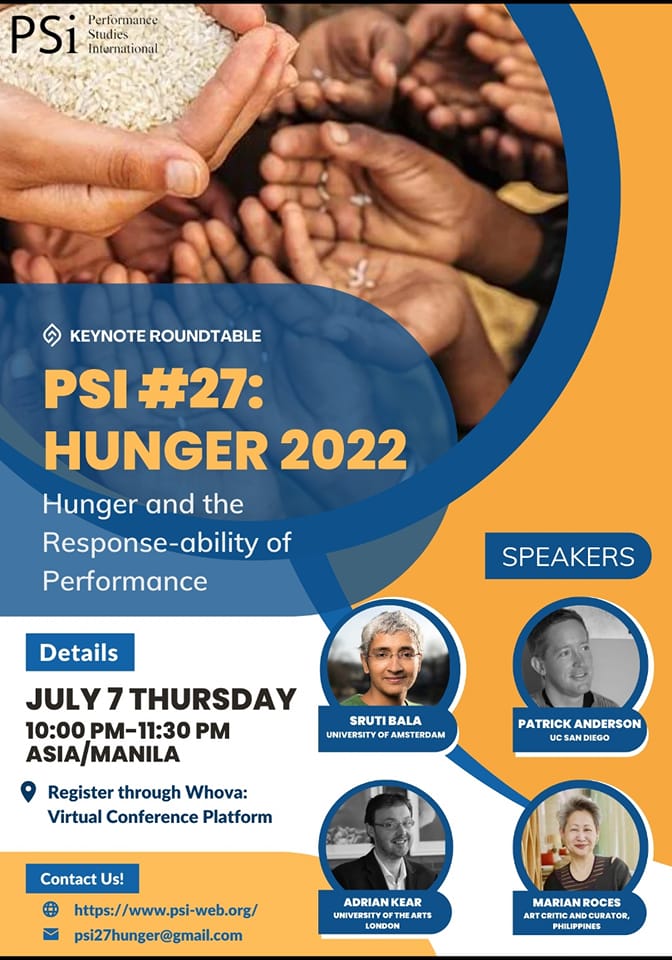
Layeta Pinzon Bucoy and I will be presenting “MonoVlogging Hunger: Online Dramatization of Food Inaccessibility in the Pandemic” at Performance Studies International (PSi) #27: Hunger 2022 next week.
This performance-lecture is part of the several experiments for my UP Enhanced Creative Work & Research Grant (ECWRG 2020-2-12C) creative work titled” El Traje Dela Cuerpo Conquistada (The Trail/Gown of the Conquered Body),” written by Layeta P. Bucoy and design by John Carlo Pagunaling.



The Giving Tree ko talaga ang MonoVlog at siyempre si Layeta Pinzon Bucoy! As always, riot ang presentation, Lallie!
Tapos na ang IFTR presentation ng MONOVLOG: VIRUS, VIRAL, VARIANT IN DIGITAL THEATRE IN THE PHILIPPINES. May future po ang ganitong timpla ng MonoVlog sa world (world congress kasi ito. Haha). Sinuot ko yung filipiniana bolero ni Debbie na gamit ko rin sisa sa mga MonoVlog.
Special mention ang mga gawa ng kaibigan na performance:
MonoVlog ng TP (salamat, Tata Fernando C. Josef)
MonoVlog ng Sining Banwa (salamat, Sari Saysay)
Dulaang UP’s Tinarantadong Asintado (Bucoy-Rutaquio)
Manila Wrestling Federation (salamat, William Elvin Manzano)
Battalia Royale (salamat, SLE)
Ang performances na nireresearch ko noon ay unti-unti na sumusulpot sa ginagawa ngayon. Salamat sa inyong generosity!
Ito yung panel namin:
GP 2-12 VIRAL SPECTATORSHIP OF COVID-19-TIMES
Chair: Lynne Kendrick
BEST SEAT TO RUN AND GUN – BEGINNINGS OF MULTI-VIEW STREAMING KINESTHETIC
SPECTATORSHIP IN LIVE ARTS
Ljubisa Matic (Independent Scholar)
ECHOES OF THE FRAGILE CITY: THE HOUSE AS A WORLD AND A STAGE
Antoni Ramon Graells and Tomàs Ivan Alcázar Serrat (Universitat Politècnica Catalunya)


 Olive Nieto